Dakota Resource Council
DRC Blog
Why the slogan “Teddy Roosevelt Built It. Doug Burgum Sold It.” is grounded in facts.
July 7, 2026
“Teddy Roosevelt Built It. Doug Burgum Sold It.”
It is a political slogan, but it is one rooted in verifiable facts. While no one claims that Secretary of the Interior Doug Burgum has literally sold America’s public lands, his own words and policy decisions have consistently treated them as economic assets whose primary purpose is to generate revenue through extraction and development. That represents a fundamental departure from the conservation philosophy Theodore Roosevelt spent his presidency building.
This is why Dakota Resource Council joined the campaign.
Teddy Roosevelt Built America’s Public Lands Legacy
Theodore Roosevelt transformed conservation in the United States.
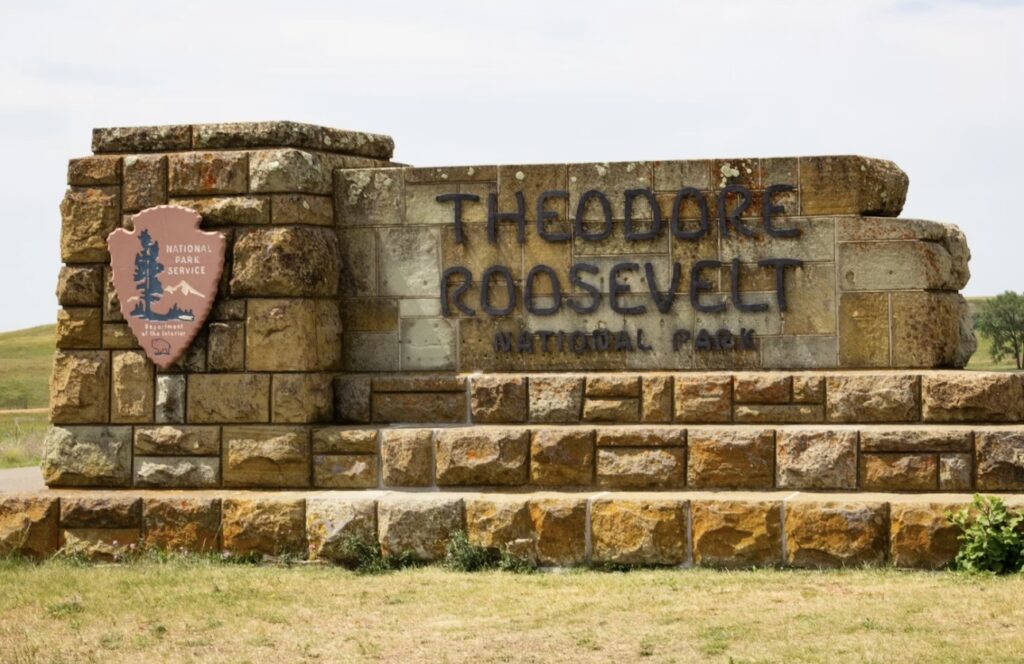
During his presidency, he permanently protected approximately 230 million acres of public land, created five national parks, established 18 national monuments, created 51 federal bird reservations, and dramatically expanded the national forest system.
Roosevelt believed America’s natural resources belonged to the public and should be conserved so that future generations could benefit from them. He argued that conservation was not about preventing all use of public lands, but about ensuring they were managed wisely and protected from short-term exploitation.
That philosophy remains the foundation of America’s public lands system today.
Doug Burgum Has Promoted a Different Philosophy
The slogan begins with Burgum’s own description of public lands.
During his confirmation process to become Secretary of the Interior, Burgum described America’s public lands as part of the nation’s “balance sheet,” emphasizing the enormous financial value of the oil, gas, coal, and mineral resources they contain. He argued that these resources should be developed to drive economic growth and advance what the administration calls “American energy dominance.” (Reuters)
That language matters because it reflects a fundamentally different way of viewing public lands.
Roosevelt viewed public lands as a public trust.
Burgum has repeatedly described them as economic assets whose value should be unlocked through expanded development.
The Policies Match the Rhetoric
Since becoming Secretary of the Interior, Burgum has pursued policies consistent with that philosophy.
His department has:
- Accelerated permitting for oil, gas, mining, and energy projects on public lands.
- Expanded opportunities for oil and gas leasing on federal lands.
- Reopened more than 1.5 million acres of the Arctic National Wildlife Refuge to oil and gas leasing.
- Reduced regulatory barriers intended to slow resource extraction.
- Continued promoting expanded mining and fossil fuel production across federal lands under the administration’s “energy dominance” agenda. (Reuters)
These are policy choices, not campaign rhetoric and they represent a significant shift toward prioritizing industrial development on public lands.
Why “Sold It”?
Critics sometimes respond that no federal lands have literally been sold.
That misses the point.
The slogan refers to a broader shift in how public lands are managed.
When public lands are increasingly viewed through the lens of their commercial value, how much oil can be drilled, how many minerals can be mined, or how much revenue can be generated, the public’s conservation interest becomes secondary to private development.
In that sense, “sold” is not a statement about transferring ownership. It is a statement about transferring priorities.
Instead of asking, “How do we protect these lands?” the question becomes, “How do we maximize their economic return?”
That is precisely the philosophical shift reflected in Burgum’s own statements and Interior Department policies. (U.S. Department of the Interior)
Why Dakota Resource Council Joined the Campaign
Dakota Resource Council did not join this campaign because of party politics or personal disagreement with Doug Burgum.
We joined because the contrast between Theodore Roosevelt’s conservation ethic and Secretary Burgum’s public lands agenda is real.
Roosevelt built a system based on stewardship, public ownership, and long-term conservation.
Secretary Burgum has advocated managing those same lands primarily as economic assets, expanding drilling, mining, and industrial development while reducing barriers to extraction. (Reuters)
Reasonable people can support or oppose those policies.
But they should also recognize what they represent: a different vision for America’s public lands.
That is why we believe the slogan “Teddy Roosevelt Built It. Doug Burgum Sold It.” is factually grounded. It captures a clear policy contrast between a president who built America’s public lands legacy around conservation and a secretary whose agenda has focused on increasing the commercial use of those same public lands.
Whether that is the right direction is ultimately for the American people to decide.